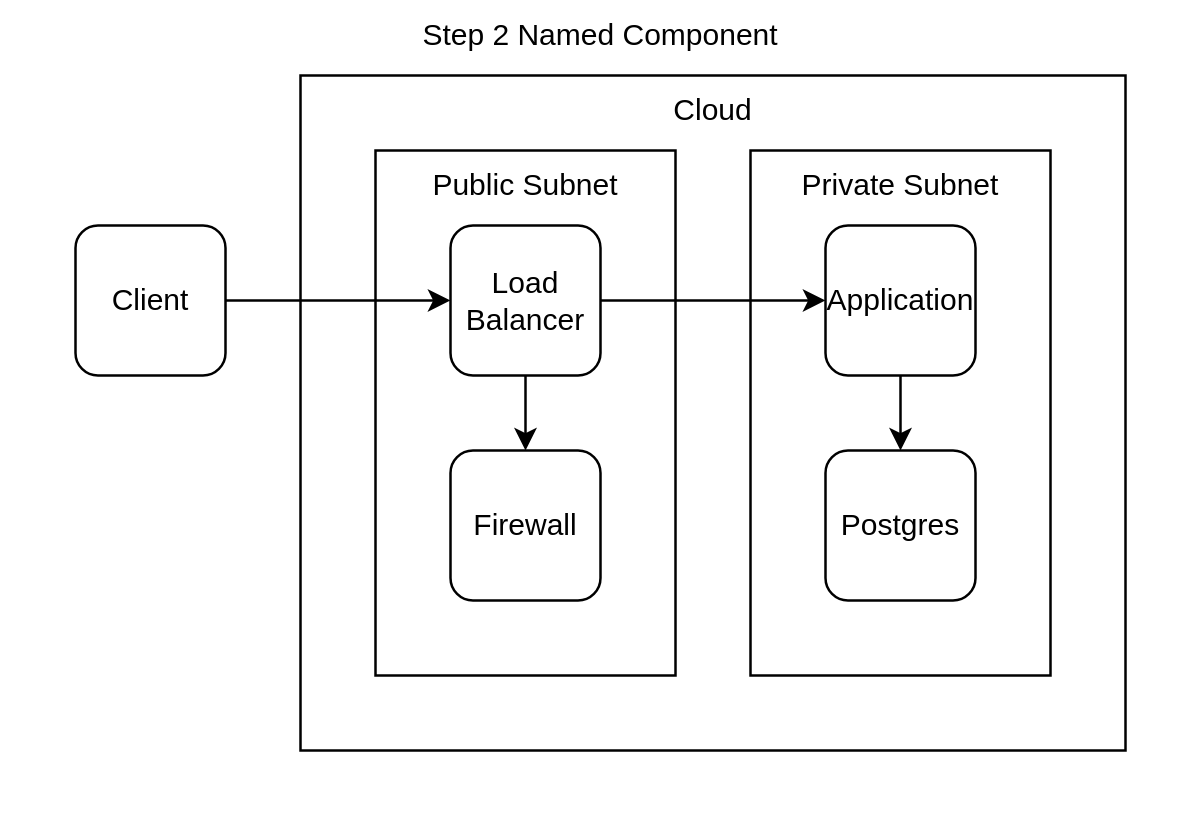
Step 2: Named Component
This example use only named component function syntax to define the diagram. It shows a cleanner diagram defined which is shows structure clearly. It generate the same diagram as previous Step 1: Basic Shape
- Source
- Diagram
app.tsx
import { Shape } from '@dinghy/base-components'

export default () => (
  <WebApp>
    <Client />
    <Cloud>
      <PublicSubnet>
        <LoadBalancer />
        <Firewall />
      </PublicSubnet>
      <PrivateSubnet>
        <Application />
        <Postgres />
      </PrivateSubnet>
    </Cloud>
  </WebApp>
)

const WebApp = (props: any) => <Shape {...props} />

const Client = (props: any) => <Shape _dependsOn='Load Balancer' {...props} />

const Cloud = (props: any) => <Shape {...props} />

const Subnet = (props: any) => <Shape _direction='vertical' {...props} />

const PublicSubnet = (props: any) => <Subnet {...props} />

const PrivateSubnet = (props: any) => <Subnet {...props} />

const LoadBalancer = (props: any) => (
  <Shape _dependsOn={['Firewall', 'Application']} {...props} />
)

const Application = (props: any) => <Shape _dependsOn='Postgres' {...props} />

const Firewall = (props: any) => <Shape {...props} />

const Postgres = (props: any) => <Shape {...props} />